
Whilst researching theories on visual perception, I came across a theory called Gregory’s Theory of Visual Assumption. It was here where I came across Richard Gregory’s Hollow Mask Experiment. I was truly amazed with what I was seeing because I couldn’t believe what I was seeing.
Looking at the front of the mask, I knew exactly what I was looking at; a protruding nose, hollow eyes, as well as projecting lips. Therefore, I would assume that when the mask is turning, I would begin to see the inside of the mask with the features still facing outwards. However, my brain questioned what I began to see.
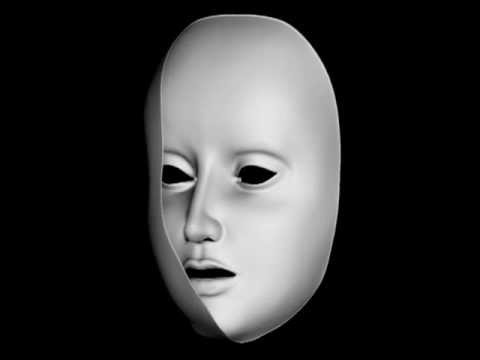
Gregory’s Theory of Visual Assumption, suggests that we lose 90% of what we have seen by the time it reaches our brain. Which allowed me to then understand what I was seeing as the mask turned around. As the mask slowly turned around, it all looked perfectly normal, however, my brain then started looking at the inside of the mask differently. I found that the inside of the mask looked exactly the same as the outside of the mask. This was looked at in the Hollow Mask Experiment.
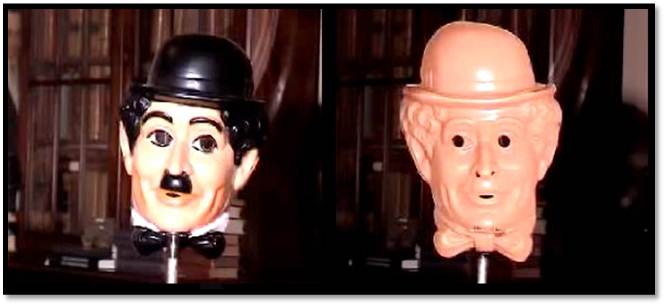
Gregory, used a hollow Charlie Chaplin mask to prove his theory. We would assume that the features inside the mask would point outwards and protrude from the outside of the mask. However, our brain is simply seeing a face in front of us. We have lost 90% of what we have understood to have seen by the time this information reaches our brain, so based on previous experiences of looking at a face, we would assume that all the features of a face would protrude outwards, even if we know that we’re looking at the inside of a mask. This is why we see the mask looking the same on the inside as it does on the outside.
This idea of illusions and assumptions of what we are seeing, is something that really interests me. I find it fascinating how we understand what we see, as well as how we interpret the information that we see on a daily basis. At this stage, I feel like the more research I do, the more informed my final piece will be. So, it is important to understand theories like these.
 Holly's Illustrations